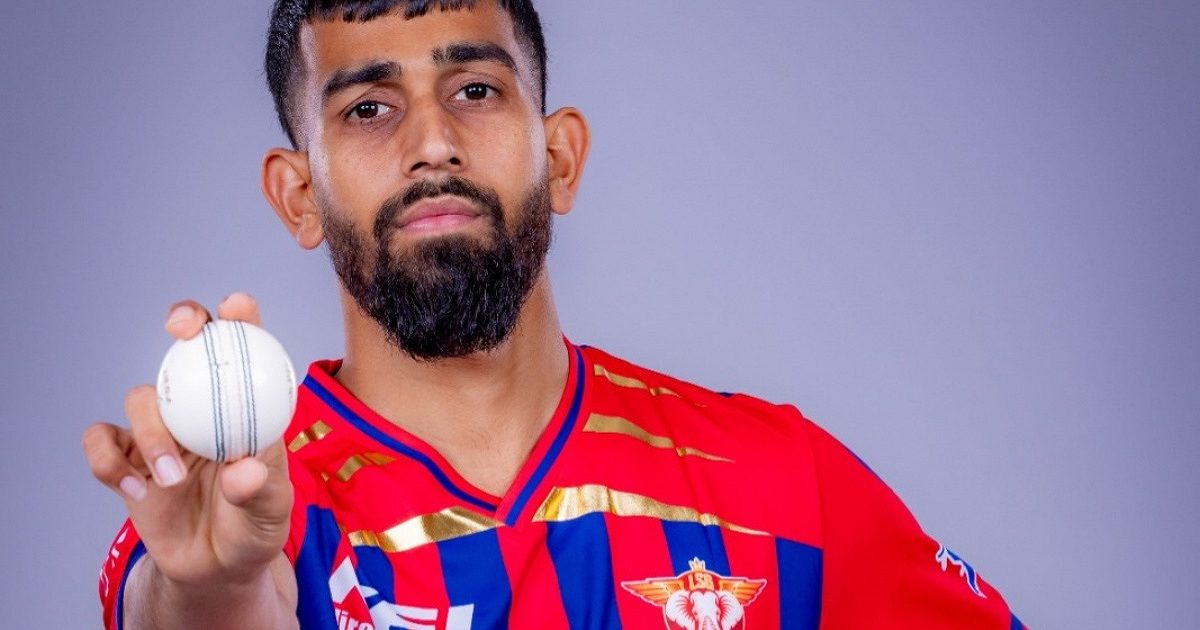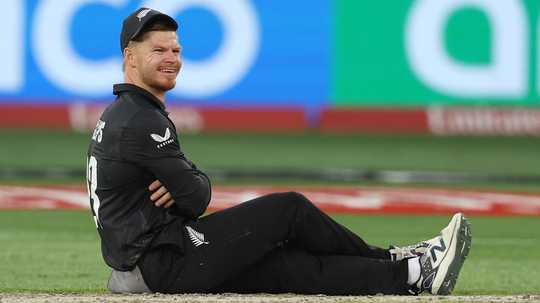
Glenn Phillips has become one of the most watchable cricketers on the planet — a powerful middle-order batter, a useful off-spinner and arguably the best outfielder in the game. He scored a 46-ball T20I century against the West Indies in 2020, made 104 from 64 balls against Sri Lanka at the 2022 T20 World Cup (an innings in which 40 runs came from running between wickets), and in March 2024 became the first New Zealand spinner in 16 years to take a home Test five-wicket haul, against Australia. His catches to dismiss Mohammad Rizwan and Virat Kohli in the 2025 Champions Trophy were the kind of athletic plays most fielders never make once in a career. This article looks at what Phillips has actually said about his training, body and lifestyle — and separates that verified record from sensible, clearly labelled suggestions based on the demands of his role.
🧠 Fitness philosophy & lifestyle
"A genetically prime body" — and what he actually means
The most quoted line about Glenn Phillips's athleticism comes from his 2024 Wisden interview, titled "I've been given a genetically prime body, it's my responsibility to use it well." It captures his central belief: whatever physical gifts you have, the real work is making the most of them. In the same interview he explained that trying to suppress his natural energy took away his "X-factor" — he plays better when he commits fully and keeps improving.
Importantly, Phillips himself has walked back any scientific reading of that phrase. In a July 2025 interview with Cricbuzz, he said he had never undergone testing that established anything genetically exceptional. He credited hard work and full commitment instead, while speculating that his naturally tight muscles and tendons might help him generate speed. That speculation is his own explanation, not established sports science — and the distinction matters.
A sporting family and a team-first engine
Phillips comes from a sporting family: both of his parents played hockey, and his grandfather was a professional footballer who held up Jonty Rhodes as the fielding example to follow. That background helps explain why fielding was never an afterthought in his game.
His effort in the field is also deliberate team policy. Phillips has explained that he cannot always succeed with bat or ball, but he can always control his attitude and energy — and that he cannot expect teammates to give everything for him if he does not do the same for them. The spectacular catches are the visible tip of a much deeper habit of total commitment.
A cricketer who never stopped being a multi-sport kid
Phillips did a fair bit of gymnastics at school, which he credits for teaching him to tuck, roll, dive and land properly — the foundation of his confidence when hurling himself at hard outfields. A 16-foot garden trampoline doubled as a laboratory for football-goalkeeping games and cricket dives, letting him learn risky movements in a safer environment.
Even now he borrows from other sports. He studies baseball and NFL movements, practises throwing with his non-dominant left arm, and experiments with different pickup-and-throw combinations to preserve momentum. He has linked archery to focusing on a repeatable process rather than obsessing over the target, and golf to patience. Away from cricket entirely, he is a keen aviator — in March 2025 he told the BBC he sometimes spent four or five hours a day on a hotel-room flight simulator, and by mid-2025 Cricbuzz described him as a certified pilot.
🏋️ Glenn Phillips's workout routine
Strength training and the 800 press-ups story
The most famous number in Phillips's training history comes from an October 2021 ESPNcricinfo report: he said he had been doing 800 press-ups in a day, and credited hard work in the gym — along with added body weight — for a clear jump in his six-hitting power. At that point his 89 T20 sixes in 2021, including The Hundred, were the most in the game that year.
Two cautions apply. First, that volume was reported in 2021; it should not be read as his permanent, year-round prescription today. Second, Phillips himself framed the improvement as more than muscle — he paired the gym work with a better understanding of his strongest shots and which deliveries to attack. No verified, coach-authenticated version of his current lifting split, loads or weekly schedule has been published, so the strength sections of the sample week below are illustrative, built from the demands of his role rather than presented as his actual programme.
Sprint speed and acceleration
Phillips has put two self-reported numbers on the record: a hand-timed 11.2-second 100 metres at school, and an agility T-test — forward running, lateral shuffling, cone touches and backtracking — completed in just under nine seconds. He is careful to distinguish himself from specialist sprinters, and these are self-reported figures rather than certified records, but they match what the footage shows.
His interest in acceleration is practical, not cosmetic. At the 2022 T20 World Cup he adopted a crouched, three-point-style start at the non-striker's end — a spontaneous experiment to watch the bowler and explode out faster while keeping a foot behind the crease. He even laughed that he had the wrong arm-and-leg arrangement. The broader point stands: in his 104 against Sri Lanka, 40 runs came from running between wickets. Repeated ten-to-twenty-metre accelerations are a genuine scoring weapon, and he trains and thinks about them accordingly.
Diving, landing and body control
Phillips's fielding looks like pure instinct, but he describes it as learned skill layered on top of athleticism. The gymnastics background gave him landing mechanics; years of trampoline games gave him air awareness. The result is a fielder comfortable launching horizontally to either side — as Rizwan and Kohli discovered in the 2025 Champions Trophy.
For readers, the transferable lesson is sequencing: learn to land safely (tuck, roll, absorb) on forgiving surfaces before ever attempting full dives on hard ground. That is exactly how Phillips built the skill.
"There's no heroes at training"
Perhaps the most surprising thing Phillips has said about his craft is how conservative his practice is. "I'm very basic at training. I try to catch as many basic balls as possible," he told Cricbuzz, explaining that he generally leaves reactionary diving catches for matches because the training injury risk is not worthwhile. He made the same point to the BBC: "There's no heroes at training."
This is not a man who skips fielding practice — it is a man who has thought about risk management. High volumes of fundamental catches build the skill; the spectacular stuff is saved for when the match demands it. For amateur players who copy highlight reels dive-for-dive on concrete-hard outfields, it is a genuinely useful correction.
Anticipation: the invisible half of fielding fitness
In a technical interview with The Cricket Monthly, Phillips broke down the mental side of his fielding. He watches the batter rather than following the bowler's delivery, reading body position and bat-swing cues to identify the ball's likely line and start moving early. The goal is to cover as much ground as possible before the final reactive movement — so the dive, when it comes, is short and controlled rather than desperate.
He also emphasises timing the run so the ball meets the hands at the right moment, and — for boundary work — keeping the hands high and in front for depth perception while building a strong, stable base for jumping or relay throws. Fitness makes the range possible; anticipation is what turns range into wickets.
Endurance, mobility and flexibility — the honest gaps
The public record does not include Phillips's aerobic conditioning structure, Yo-Yo test scores, or a documented yoga, Pilates or stretching routine. His own comments about naturally tight muscles and tendons should not be rewritten as evidence of unusual flexibility — if anything, they suggest mobility work matters more for him, not less.
What is clear from his match play is repeated-sprint endurance: long days in the outfield, hard running between wickets, and bowling spells on top. The conditioning day in the sample week below reflects those demands, but it is an editorial construction, not his disclosed programme.
🥗 Glenn Phillips's diet plan
What Phillips has actually said about food
Very little, in fact. The interviews reviewed for this article do not disclose a detailed meal plan, calorie target, macronutrient split or supplement regimen. He has spoken about gaining weight and getting stronger in the gym, which implies eating to support muscle growth — but that is an inference, not a disclosed diet.
Any website presenting a specific "Glenn Phillips diet" with exact meals and numbers is inventing it. What follows instead is a clearly labelled, sports-nutrition-based illustrative plan for someone training for his role — explosive power, repeated sprints and long days in the field.
A suggested daily structure (illustrative, not his confirmed diet)
Breakfast: eggs or yoghurt with oats, fruit and toast — protein plus slow carbohydrates to anchor a training morning. Mid-morning: a banana, a handful of nuts or a smoothie around the first session.
Lunch: a palm-sized portion of chicken, fish or legumes with rice or potatoes and a large serve of vegetables. Pre-training (60–90 minutes before): easily digested carbohydrates such as a sandwich or fruit. Post-training: 20–40g of protein with carbohydrates within a couple of hours — a milk-based smoothie, eggs on toast or a balanced meal all work.
Dinner: protein, vegetables and a carbohydrate portion matched to the day's load — bigger after double sessions, lighter on rest days. Hydration: water through the day, with electrolytes during long fielding sessions or hot conditions. These are standard sports-nutrition principles, not Phillips's personal menu.
How nutrition supports his style of play
Explosive power depends on muscle that is built and repaired — which is why adequate daily protein matters more than any single supplement. Repeated sprinting runs on carbohydrate; under-fuelling shows up as slow legs in the last hour of a day in the field. And body control under fatigue — the difference between a held catch and a spilled one late in a match — is partly a fuelling and hydration story.
For cricketers specifically, match duration is the nutritional challenge: eating and drinking enough across six or seven hours without feeling heavy is a skill international teams practise deliberately.
- Phillips has not publicly shared a detailed personal meal plan — treat any specific menu online with caution.
- He has spoken about gaining weight and getting stronger in the gym, which implies eating to support muscle growth.
- A suggested approach for a similar role: protein at every meal, carbohydrates timed around training, and plenty of fruit and vegetables.
- Hydration matters across long days in the field — water and electrolytes through the day, not just at drinks breaks.
💡 Workout & diet tips based on Glenn Phillips's lifestyle
- Train the basics at high volume. Phillips catches "as many basic balls as possible" at training — the spectacular is built on thousands of ordinary repetitions.
- Learn to fall before you learn to dive. Tuck-and-roll and landing drills on grass or mats come first; hard-ground dives come last, if ever.
- Add a weekly acceleration session: 6–10 short sprints of 10–30 metres with full recovery builds the exact speed cricket uses.
- Practise running between wickets as a skill, not a punishment — aggressive, repeatable 20-metre bursts with a partner calling.
- Do not copy the 800-press-up day. That was one reported period of one elite athlete's life; build pressing volume gradually instead.
- Play or watch other sports. Phillips borrows movement ideas from baseball, the NFL, archery and golf — cross-training the eye and the brain counts.
- Control what you can control. His team-first rule — attitude and energy are always available even when runs are not — costs nothing and changes games.
- Treat rehabilitation as a project you co-own with professionals, the way Phillips approached his 2025 adductor injury.
🛁 Recovery & injury prevention
The back problem that changed his career path
ESPNcricinfo reported in 2021 that a back condition prevented Phillips from keeping wicket for long periods — one of the reasons a player who started as a keeper-batter developed into a genuine off-spinning all-rounder. It is a useful reminder that injury management does not just protect a career; sometimes it redirects it into something better.
The 2025 adductor injury — and how he came back in nine weeks
Playing for Gujarat Titans in 2025, Phillips tore adductor tendons away from the pelvis — in his own description, a grade-three adductor brevis and grade-four adductor longus injury that did not require surgery. The initial estimate was at least three months out; he returned to the field in about nine weeks.
He attributes the faster return to taking an active role in his rehabilitation — discussing and adjusting proposals with physiotherapists and strength-and-conditioning staff rather than passively following a sheet. He is also honest about the limits of that approach: returning to bat and bowl did not mean full sprint capacity had returned, and months later he still measured himself against racing his brother over short distances.
One caution he would likely endorse: he has discussed deliberately pushing rehabilitation within a small pain threshold. That was his individual experience under close professional oversight — not a recommendation to train through pain.
Everyday injury prevention, Phillips-style
His clearest documented prevention habit is risk selection: no hero dives at training, because the injury cost outweighs the practice benefit. Add the standard pillars — warm-ups that raise temperature and rehearse movement, cool-downs, sleep, and workload management across formats — and you have the realistic recovery picture for a three-format athlete.
Specifics like his sleep targets, ice-bath habits or wearable data have not been published, and this article does not pretend otherwise.
📅 Sample weekly plan
An educational sample inspired by Glenn Phillips's role and documented habits — not their confirmed personal schedule.
🏋️ Monday
Strength — upper body- Bench press 4x6
- Pull-ups 4x8
- Overhead press 3x8
- Press-up variations 3 sets
- Core circuit
⚡ Tuesday
Sprint & agility- Acceleration work 8x20m
- Lateral shuffle drills
- Agility T-test style course
- Running-between-wickets practice
🦵 Wednesday
Strength — lower body- Back squats 4x6
- Romanian deadlifts 3x8
- Split squats 3x8 each
- Calf raises 3x15
- Landing mechanics practice
🏋️ Thursday
Fielding & skills- High-volume basic catching
- Pickup-and-throw drills (both arms)
- Boundary relay technique
- Batting power session
🏋️ Friday
Explosive power- Box jumps 4x5
- Medicine ball throws 4x6
- Broad jumps 3x5
- Short sprints 6x30m
🔥 Saturday
Conditioning- Interval runs 10x100m
- Tempo runs
- Mobility circuit
- Light swimming or cycling
😴 Sunday
Rest- Full rest
- Gentle stretching
- Walk
❓ Frequently asked questions
What is Glenn Phillips's workout routine?
The public record confirms substantial gym work, weight gain linked to improved power-hitting, and a reported 800-press-up day in 2021. It does not disclose a complete current weekly routine — the seven-day plan in this article is an illustrative sample based on the demands of his role, not his confirmed schedule.
Does Glenn Phillips really do 800 push-ups every day?
He reported doing that volume in 2021, during a period he credited for his improved power-hitting. It should not be presented as a verified current or permanent daily habit, and it is not a sensible target for most people.
How fast is Glenn Phillips?
He told Cricbuzz he ran a hand-timed 11.2-second 100 metres at school and completed an agility T-test in just under nine seconds. These are self-reported figures rather than certified records, but they align with his on-field speed.
How did Glenn Phillips learn to dive like that?
He credits school gymnastics — learning to tuck, roll, dive and land properly — plus childhood games on a 16-foot garden trampoline that let him practise aerial movements safely. The confidence on hard outfields was built years earlier on forgiving surfaces.
Does he practise his spectacular catches?
Mostly no. Phillips says he is "very basic at training", focusing on high volumes of ordinary catches, and generally saves reactionary dives for matches because the training injury risk is not worth it. "There's no heroes at training," as he put it to the BBC.
What does Glenn Phillips eat?
He has not publicly shared a detailed meal plan, calorie target or supplement regimen. The nutrition section of this article is a clearly labelled sports-nutrition illustration for his role, not his confirmed diet.
What does the "genetically prime body" quote actually mean?
It is about responsibility, not laboratory results. Phillips told Wisden he felt obliged to make the most of his physical gifts — and later clarified to Cricbuzz that no testing had established anything genetically unusual. Hard work, in his own framing, does the heavy lifting.
What can beginners learn from Glenn Phillips?
Master fundamentals at high volume, learn landing mechanics before attempting dives, train short-distance acceleration, and bring full effort to the parts of the game you can always control — attitude, energy and preparation.
🏁 Conclusion
Glenn Phillips's fitness story is more interesting than a secret workout, because there is no secret workout. There is a player who lifted and ate to get stronger, who ran and jumped and tumbled as a kid until body control became second nature, who practises the boring basics religiously, and who treats his physical gifts as a responsibility rather than a shortcut.
The practical lessons are refreshingly accessible: build strength progressively, train short sprints, learn to land before you dive, keep training volumes sensible, and bring total effort to the controllable things. That combination — not a magic programme — is what produced cricket's most electric athlete.
🔗 Sources & references
- Glenn Phillips: I've been given a genetically prime body, it's my responsibility to use it well — Wisden, 1 Aug 2024
- Beyond the dive: The many layers of Glenn Phillips — Cricbuzz, 12 Jul 2025
- World's best fielder - NZ's Superman Phillips on what makes him great — BBC Sport, 8 Mar 2025
- Glenn Phillips credits 'hard work at gym' for his power-hitting: 'I was doing 800 press-ups a day' — ESPNcricinfo, 11 Oct 2021
- Think catch, not save: inside the art of boundary fielding — The Cricket Monthly, 22 Aug 2024
- Superb and unusual Glenn Phillips century breaks the T20 mould — ICC, 29 Oct 2022
- The backing up revolution: Phillips sprints out of the blocks — ICC, 29 Oct 2022
- Glenn Phillips' Call of Duty — The Cricketer, 9 Jun 2021
- Daniel Vettori: Barbados Royals 'lucky' to have 'total cricketer' Glenn Phillips — ESPNcricinfo, 27 Aug 2021
💡 Key takeaways
- Athleticism is trained, not just inherited — Phillips credits gym work and deliberate practice, not genetic testing.
- Master the basics at training and save the spectacular for match day.
- Speed, strength and body control each need their own training slot.
- Childhood multi-sport play (gymnastics, trampoline, other sports) builds coordination that pays off for decades.
- Take an active, informed role in your own recovery from injury — with professional guidance.
Photo: Wikimedia Commons. Compiled from public interviews and trainer reports. Suggested workout and meal plans are educational illustrations, not the athlete's confirmed personal schedule or diet. Adapt exercise and nutrition to your own level, and consult a qualified professional if you have an injury or medical condition.