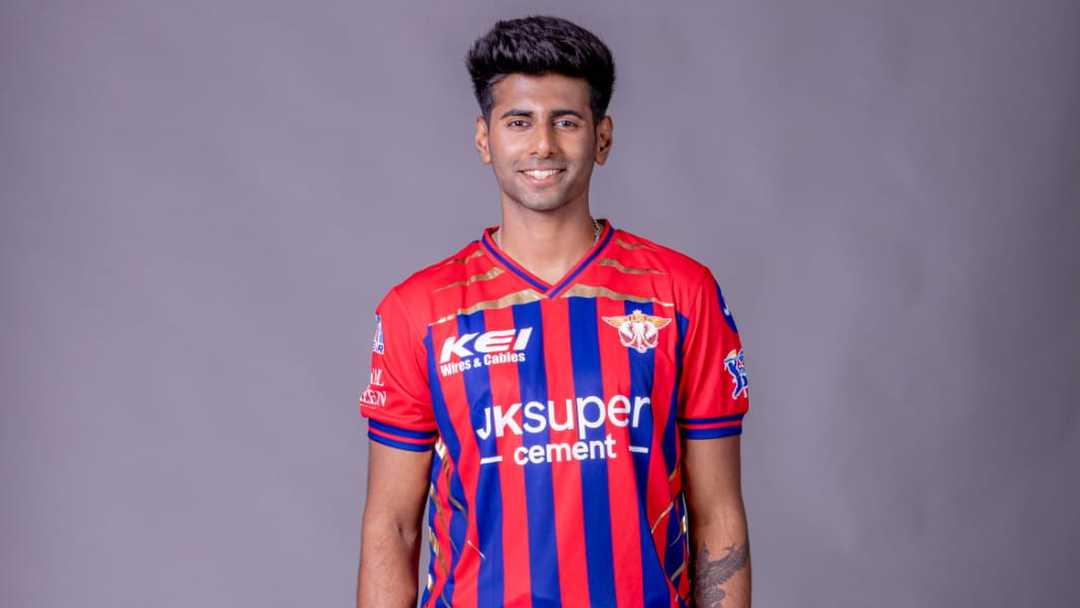
Abhishek Sharma has turned power-hitting into an art form. The left-handed opener scored 484 runs at a strike rate above 200 in IPL 2024 to drag Sunrisers Hyderabad to the final, then smashed 135 from 54 balls against England at the Wankhede in February 2025 — an innings that included taking apart Mark Wood and Jofra Archer. Behind the sixes sits a preparation story that is unusually well documented: a Yuvraj Singh-designed early-morning timetable, mentoring from Brian Lara, an opening partnership with Travis Head, and a childhood built around his father's academy. This article lays out what is actually on the record about his fitness, diet and lifestyle — and clearly marks the gaps where the public record runs out.
🧠 Fitness philosophy & lifestyle
The 4 a.m. timetable Yuvraj Singh built
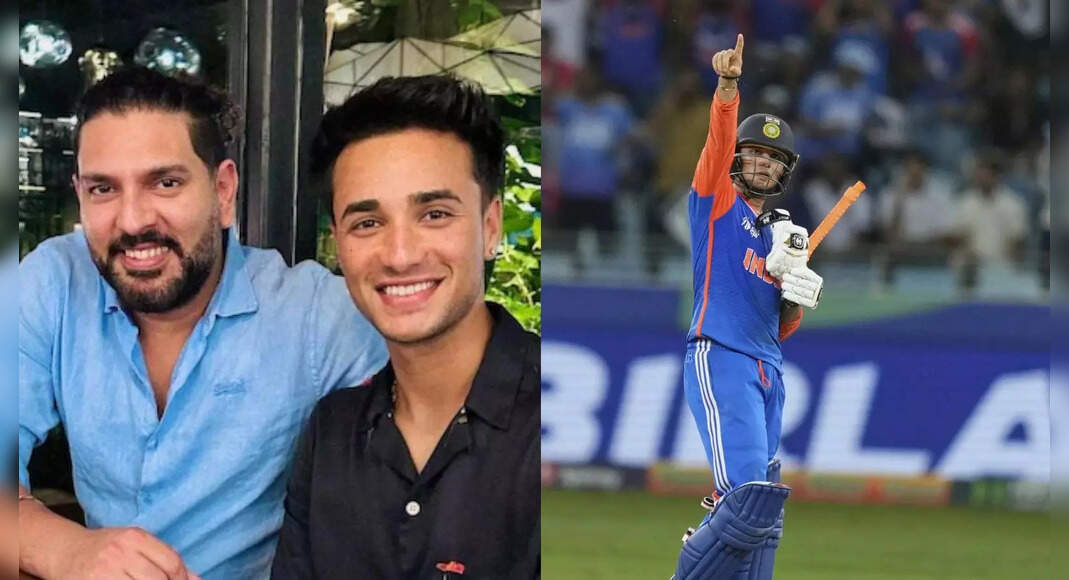
The most detailed window into Abhishek Sharma's preparation comes from his father, Raj Kumar Sharma, who described to the Times of India a training timetable designed by Yuvraj Singh: wake at 4 a.m., meditate for half an hour, swim for 45 minutes in cold water, head to the gym, and then reach the cricket ground by around 7 a.m.
Two things are worth noting. First, this is a father's account of a timetable, not proof that Abhishek follows it identically every day of the year, match days included. Second, the structure itself is revealing: mind first, then low-impact cardio, then strength, then skills. It is the architecture of a professional day, not a random collection of habits.
Meditation and the mental game
Meditation is not decorative in this story. His father associated the morning routine with better concentration and cleaner recognition of lengths when facing bowlers — the split-second skill that separates a 54-ball hundred from a first-over dismissal. That is a family observation rather than a laboratory finding, but it aligns with how Abhishek bats: committed, early, and apparently unbothered by reputation.
The mental side was reinforced by his environment at Sunrisers Hyderabad. Abhishek has said Pat Cummins wanted him to be attacking and aggressive, and his father described how that backing reduced the fear of dismissal. Freedom, it turns out, is a performance enhancer.
Golf, Lara and the swing connection
One of the more charming details in the record: Brian Lara, after noticing Abhishek's enthusiasm for six-hitting, took him to a golf course and suggested the sport could help his bat swing. His father says Abhishek subsequently played golf with Yuvraj in Chandigarh, and that the work on his golf stance fed into concentration and length recognition.
Whether or not golf measurably improved his bat speed, the broader principle is sound: rotational power sports share a common language of hip sequencing, weight transfer and timing. Abhishek's life has been steeped in that language since he accompanied his father — his first coach — to the academy from around age five or six.
🏋️ Abhishek Sharma's workout routine
What is actually documented
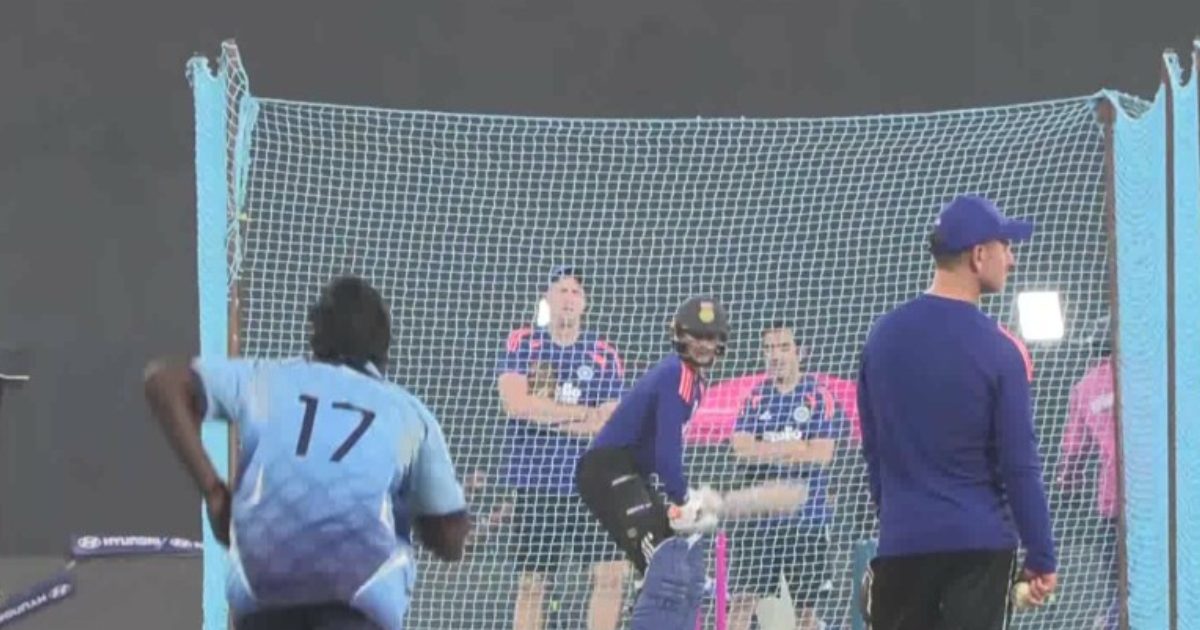
The verified record is specific about structure but not about exercises. We know the timetable includes gym work, swimming and cricket practice. We do not have a reliable public disclosure of his strength split, lifting loads, sprint prescription or a named core circuit — and this article will not invent one.
What we can do is reason from his role. An opener who attacks from ball one needs rotational power for boundary hitting, repeated short-sprint capacity for aggressive running, and the mobility to access unusual positions against pace. The sample weekly plan below is built from those demands and is clearly an editorial illustration, not his confirmed programme.
Swimming: the documented cardio
Swimming is the one conditioning modality explicitly documented in his routine — 45 minutes in cold water, per his father's account. The source does not specify strokes, distance or weekly frequency, and it does not establish whether the cold water was intended as recovery, endurance work or simply preference. It should not be recast as a verified ice-bath protocol.
What can be said generally: swimming is a staple in cricket conditioning because it builds aerobic capacity and shoulder resilience with almost no impact load — valuable for a batter who also bowls left-arm spin and fields hard.
Power for explosive batting
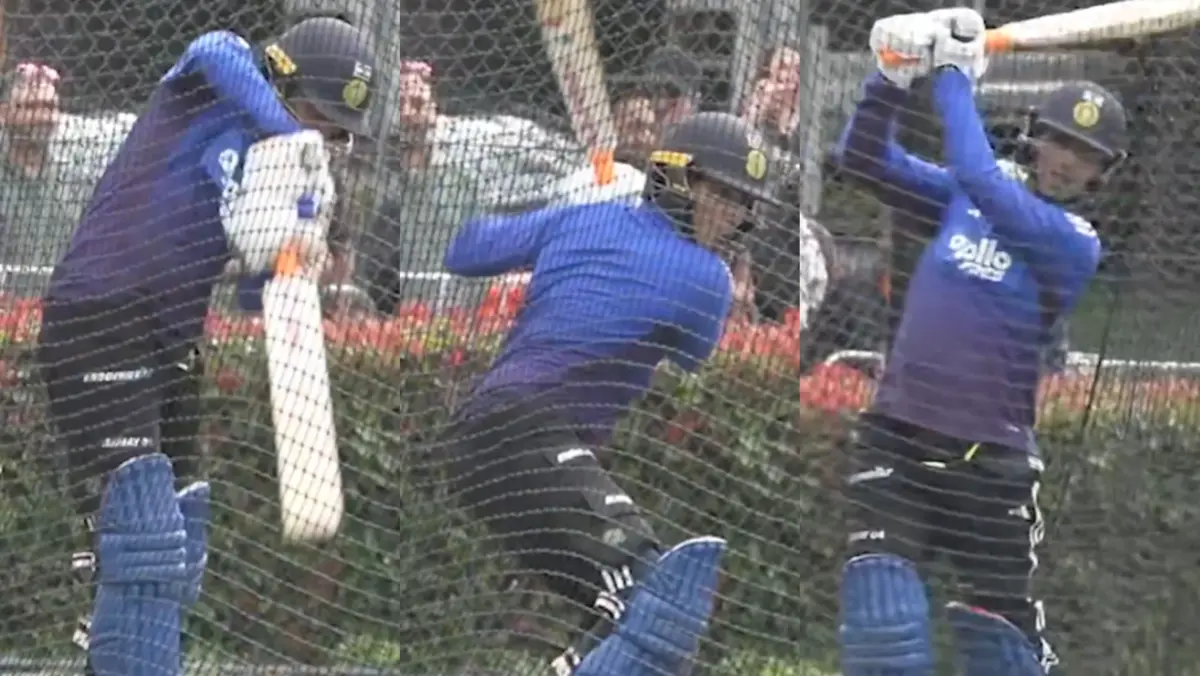
Abhishek's 135 from 54 balls against England was a masterclass in sustained power: attacking strokes against genuine pace from Wood and Archer, not just spin. That kind of innings requires the ability to produce maximal bat speed repeatedly across 50-plus deliveries — a quality built in the gym and the nets, not on a treadmill.
The illustrative gym work in the sample week — trap-bar deadlifts, rotational medicine-ball throws, hip thrusts — targets exactly that quality. It is included because rotational power is the defining physical demand of his role, not because he has published it as his routine.
Agility, running and fielding
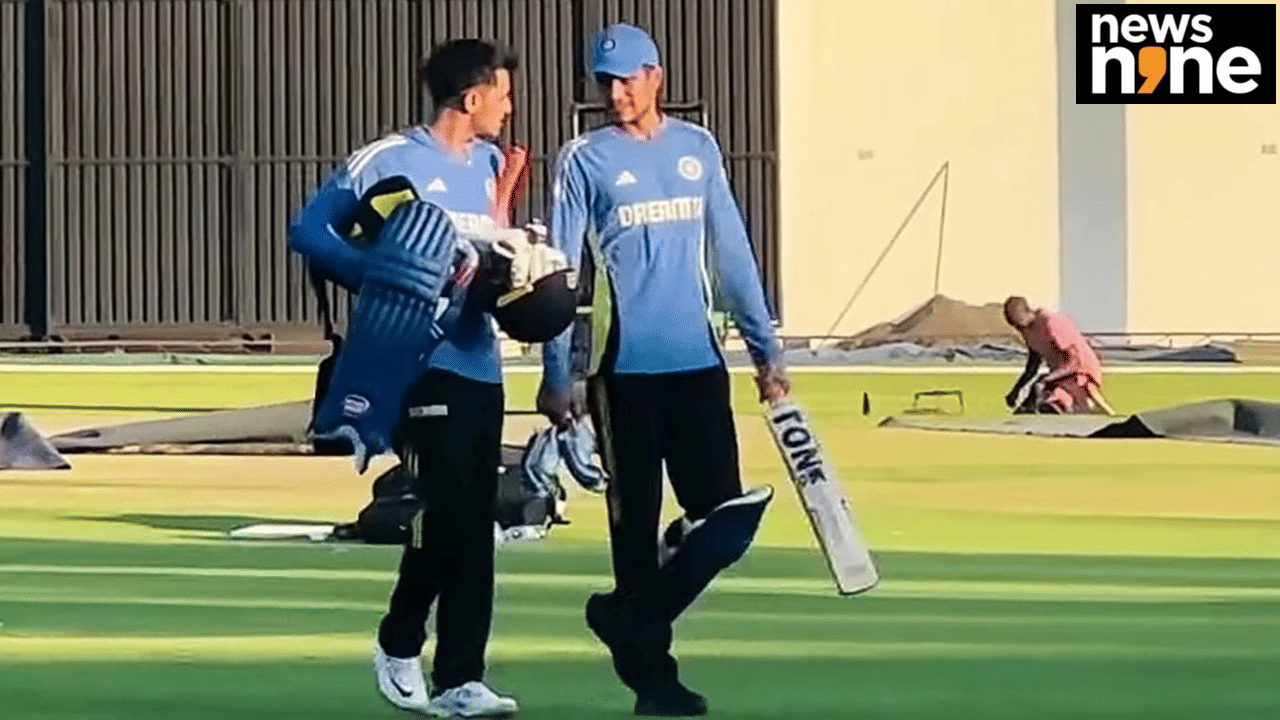
Modern opening batters are also expected to be plus fielders and relentless runners between the wickets. Short accelerations of 10–20 metres, repeated dozens of times across an innings, are cricket's real conditioning test — and the reason the sample plan includes sprint intervals and lateral work rather than long steady runs.
His January 2025 ankle twist during a catching drill in Chennai — he received on-field physiotherapy attention and did not resume batting that session — is a reminder that fielding work carries its own injury risk, even for the fittest athletes.
🥗 Abhishek Sharma's diet plan
What is known — and what is not
Here the honest answer is: very little. The interviews reviewed for this article do not confirm whether Abhishek is vegetarian, what he eats on a match day, or whether he uses any supplements. His Hindustan Times Brunch interview covers childhood, family and adjusting to fame — not a nutrition plan.
Any website presenting an exact 'Abhishek Sharma diet' with specific meals, calories or protein grams is inventing it. What follows is a clearly labelled, sports-nutrition-based illustration for someone with his training demands.
A suggested daily structure (illustrative, not his confirmed diet)
Given a 4 a.m. start: a light pre-dawn snack such as a banana or toast before the swim; a substantial breakfast after the gym — eggs or paneer, oats or paratha, fruit. Lunch built around rice or roti, dal or a protein portion, and vegetables. A pre-nets snack of fruit or a sandwich; post-session, protein and carbohydrates within a couple of hours to repair and refuel.
Dinner kept moderate on rest days and larger after double sessions. Hydration is non-negotiable in Indian conditions: water through the day, electrolytes during long outdoor sessions. These are standard sports-nutrition principles applied to his schedule — not his personal menu.
How nutrition supports explosive batting
Power-hitting is a repeat-sprint, repeat-max-effort sport disguised as a skill contest. Muscle glycogen fuels bat speed; protein repairs the rotational muscles that take a beating across 50-ball onslaughts; and hydration protects decision-making in the heat, where a two percent fluid deficit measurably dulls reaction and judgment.
For a player whose value is concentrated in the first six overs, arriving at the crease fully fuelled is not a detail — it is the job.
- A verified personal meal plan has not been published — be sceptical of exact 'Abhishek Sharma diet' menus online.
- Public reporting offers far more detail about his preparation than his plate.
- Suggested approach for a similar role: protein at each meal, carbohydrates around training, and plenty of fluids in the heat.
- Vegetarian status has been speculated about but was not confirmed in the interviews reviewed for this article.
💡 Workout & diet tips based on Abhishek Sharma's lifestyle
- Steal the structure, not the alarm clock: mind work, then cardio, then strength, then skills is a sensible order for any training day.
- Add 20–30 minutes of meditation or breathwork to your week — concentration is trainable, and Abhishek's routine treats it that way.
- Use swimming as your low-impact conditioning day if running beats up your joints.
- Train rotational power (medicine-ball throws, cable rotations) if your sport involves swinging anything.
- Play a second sport. Golf gave Abhishek another angle on swing mechanics and patience.
- Build a coach or mentor relationship that gives you confidence — his father, Yuvraj, Lara and Cummins all feature in his story.
- Do not copy a 4 a.m. start without the bedtime to match; sleep is what makes early mornings sustainable.
🛁 Recovery & injury prevention
The January 2025 ankle scare
The clearest documented injury incident: during a catching drill in Chennai on 24 January 2025, Abhishek twisted his ankle, received on-field physiotherapy attention, returned to the dressing room limping and did not resume batting in that nets session. No detailed diagnosis or rehabilitation plan was published, and this article does not speculate about one.
Recovery built into the day
Look at the documented timetable again and recovery is woven through it: meditation down-regulates the nervous system before the day begins, and swimming provides conditioning without impact. Whether or not that was the design intent, it is a sensible template.
Beyond that, the standard pillars apply to any cricketer with his workload: consistent sleep (especially with early starts), warm-ups that rehearse movement rather than just raising temperature, and honest load management across a calendar that now runs year-round.
📅 Sample weekly plan
An educational sample inspired by Abhishek Sharma's role and documented habits — not their confirmed personal schedule.
🏋️ Monday
Gym — power- Trap-bar deadlifts 4x5
- Medicine ball rotational throws 4x6
- Hip thrusts 3x8
- Pull-ups 3x8
🏊 Tuesday
Swim & mobility- Swimming 30–45 min
- Shoulder mobility
- Hip openers
- Light core work
⚡ Wednesday
Batting + sprints- Nets — power hitting
- 10x20m sprints
- Lateral bounds 3x6
- Reaction drills
🏋️ Thursday
Gym — full body- Front squats 4x6
- Bench press 4x6
- Single-arm rows 3x10
- Pallof press 3x12
🏋️ Friday
Skills & golf- Range hitting / golf round
- Throwing drills
- Fielding practice
- Stretching
🔥 Saturday
Conditioning- Interval runs 8x100m
- Battle ropes 4x30s
- Core circuit
- Easy swim
😴 Sunday
Rest- Meditation 20–30 min
- Walk
- Full rest
❓ Frequently asked questions
What is Abhishek Sharma's workout routine?
His father described a Yuvraj Singh-designed timetable: a 4 a.m. start, 30 minutes of meditation, 45 minutes of cold-water swimming, gym work, then cricket practice by around 7 a.m. Specific gym exercises, sets and loads have not been publicly disclosed.
Does Abhishek Sharma really wake up at 4 a.m.?
That is what his father told the Times of India in September 2025, describing the timetable Yuvraj Singh designed for him. It is best read as his training-camp routine rather than a guarantee about every single day of the year.
Does Abhishek Sharma meditate?
Yes — meditation appears in the timetable his father described, and his father associated it with better concentration and length recognition when batting.
Why does Abhishek Sharma play golf?
His father says Brian Lara introduced him to golf after noticing his six-hitting enthusiasm, suggesting it could help his bat swing. He has also played with Yuvraj Singh in Chandigarh.
Is Abhishek Sharma vegetarian?
This could not be verified from the reliable interview material reviewed for this article. His diet details are simply not public in any dependable form.
How did Yuvraj Singh influence his fitness?
Yuvraj is credited with designing the early-morning timetable itself — meditation, swimming, gym, then cricket — and with sustained mentoring of his batting, including the golf connection.
Has Abhishek Sharma had injuries?
He twisted an ankle during a catching drill in Chennai in January 2025 and received physiotherapy attention. No detailed diagnosis or rehab programme was published.
What can beginners learn from Abhishek Sharma?
Structure your training day deliberately, treat mental preparation as seriously as physical work, use low-impact cardio like swimming, and find mentors who give you confidence to play your natural game.
🏁 Conclusion
Abhishek Sharma's fitness story is really a preparation story. The sixes at the Wankhede were the visible product; the invisible product is a 4 a.m. timetable built by one of India's greatest cricketers, a meditation habit, cold-water swims, and a childhood spent around his father's academy.
The usable lessons do not require his alarm clock: order your training day with intent, train your mind as deliberately as your body, choose conditioning that your joints can sustain, and surround yourself with people who back your natural game. The rest — the 54-ball hundreds — is talent meeting preparation.
🔗 Sources & references
- Abhishek Sharma's secret: Wakes up at 4am, meditates till sunrise, swims for an hour, plays golf and hits sixes for fun — The Times of India, 28 Sep 2025
- Secrets of Abhishek Sharma: Help from Yuvraj, Brian Lara, Travis Head; playing golf to perfect bat swing, and 4 am mornings — The Indian Express, 28 Sep 2025
- 'Pat Cummins wanted me to be attacking and aggressive… that suited my batting': Abhishek Sharma — Hindustan Times, 31 May 2024
- Rise and shine: How cricketer Abhishek Sharma is adjusting to being famous — Hindustan Times (Brunch), 5 Jul 2024
- Abhishek, rattle and roll at the Wankhede — ESPNcricinfo, 3 Feb 2025
- Abhishek Sharma twists ankle as India suffer injury scare ahead of Chennai T20I — India Today, 24 Jan 2025
💡 Key takeaways
- Preparation can be a competitive edge — his 4 a.m. timetable was designed by Yuvraj Singh.
- Meditation and mental routines are trainable parts of performance, not extras.
- Swimming builds cardio and recovery capacity without pounding the joints.
- Cross-sport skills (golf) can sharpen a cricket swing and concentration.
- Confidence from coaches — Cummins, Lara, Yuvraj — is part of the fitness story too.
Thumbnail: Yuvraj Singh’s training video on X (8 July 2024). Compiled from public interviews and trainer reports. Suggested workout and meal plans are educational illustrations, not the athlete's confirmed personal schedule or diet. Adapt exercise and nutrition to your own level, and consult a qualified professional if you have an injury or medical condition.